Contrary to what you might think, cholesterol is an essential fat for the body. Not only is it a building block of cell membranes, it also maintains the structure of these cell membranes and plays a role in the synthesis of certain hormones. 75% of our cholesterol is produced by the liver, while the rest comes from our diet. It can be found especially in animal-based food products, such as meats, dairy products, eggs, fish, and shellfish, just to name a few.
However, not everyone are”equally at” risk of cholesterol. Genetic predispositions, such as familial hypercholesterolemia, increases this risk. It is estimated that this disorder affects 1 in every 500 people in France.
We often hear “good” and “bad” cholesterol being talked about. Cholesterol is carried through the bloodstream in the form of lipoproteins:
- Low Density Lipoproteins (LDLs) carry cholesterol from the liver to the arteries and deliver it to the organs. LDLs are therefore considered to be “bad” cholesterol.
- High Density Lipoproteins (HDLs) return cholesterol from the arteries to the liver, removing it from the organs. HDLs are therefore considered to be “good” cholesterol.
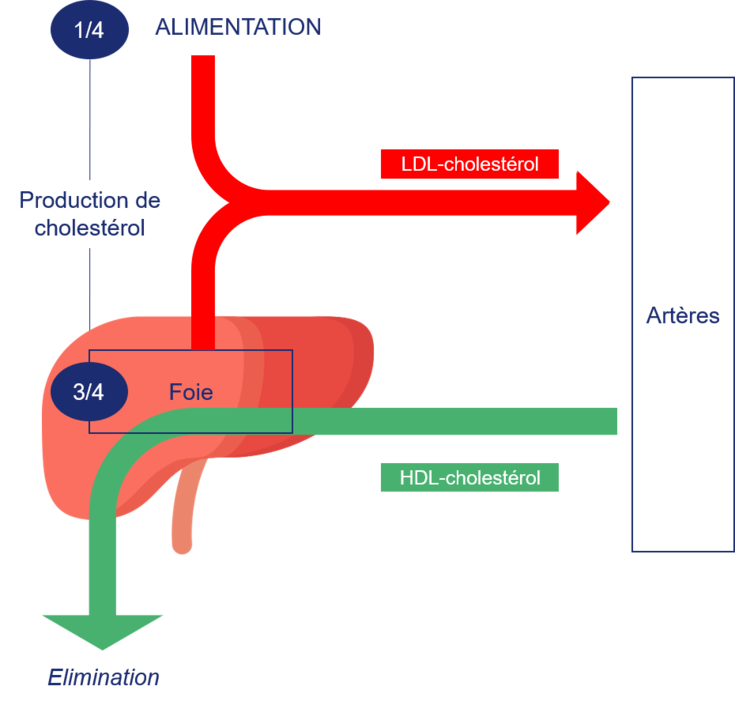
As you have probably guessed, the aim is to have the best possible ratio between HDL cholesterol and LDL cholesterol.
When there is too much LDL cholesterol in the blood, it can build up in the arteries and in turn affect your cardiovascular health.
So, what is the ideal total cholesterol level? The ideal level is somewhere between 180 and 200 mg/dL of blood. The amount of “good” cholesterol in the blood must be greater than 45 mg/dL, while there must be less than 160 mg/dL of “bad” cholesterol [1], while there must be less than 1600 mg/dL of “bad” cholesterol [1].
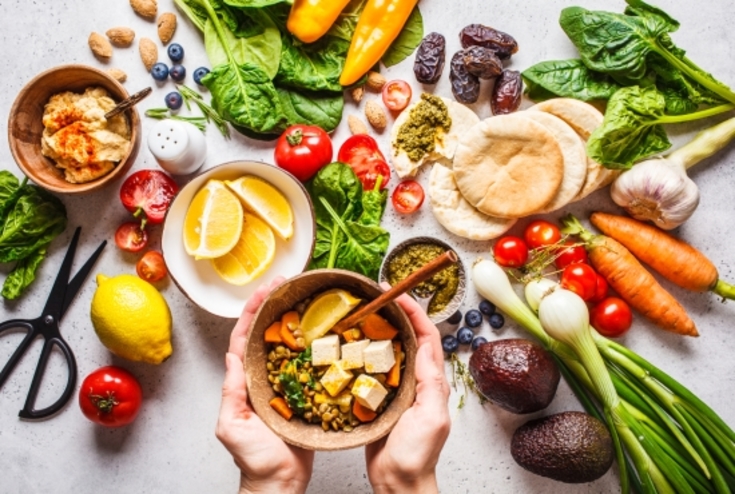
To help prevent hypercholesterolemia, it is important to have a healthy, varied, and balanced diet, with as few foods that can raise cholesterol levels as possible. These include processed products (which often contain lots of saturated fats, salt, and sugar) and products which are sources of saturated fat (meat, cooked meats (see above), pastries, fried foods, etc.).
Simply developing new food habits with healthy choices, rather than going on a diet, can be very beneficial. But there is no need to panic. Being mindful of what you eat does not mean eating things you don’t enjoy—quite the opposite in fact. You can eat a bit of everything, but just in moderation.
What can you actually eat? (not including dairy products)
| Try limiting: | Instead, try having: |
- Processed foods: ready meals, store-bought pizzas, sauces, crackers, etc.
- Animal fats: sauces, bacon, cooked meats, lard, etc.
- Fried foods and butter.
- Sugary drinks
- Sugary foods: candy, cakes, breakfast cereals, etc.
- Alcohol
| - Plant-based fats: olive oil, rapeseed oil, sunflower oil, etc.
- Five fruits and vegetables per day for fiber.
- Steam-cooked, roasted, or grilled foods.
- Fiber-rich starchy foods (pasta, rice, bread, and legumes) with every meal.
- Fish that is high in omega-3 (sardines, salmon, herring, etc.), or shellfish, two or three times a week.
- A half-gallon of water per day.
|
In general, you should try to limit “bad” fats, such as saturated fats and trans fats — a type of unsaturated fatty acid associated with increased cardiovascular risk when consumed in excess. Instead, you should have “good” fats, such as omega-9 fatty acids and essential fatty acids (omega-3 and omega-6).
As well as thinking about food, you mustn’t forget to keep moving either, with a minimum of 30 minutes of physical activity per day. And yes, exercising regularly is more important than the intensity.
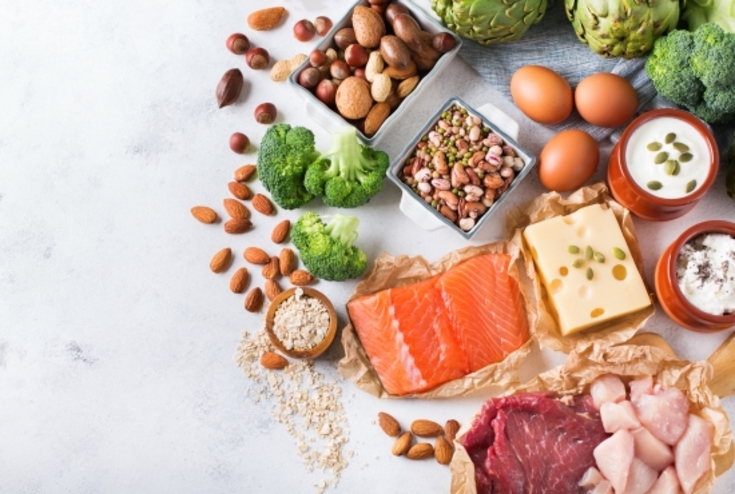
Where do dairy products fit in with all this?
Let’s end the suspense and start talking about dairy products. As you already know, having high cholesterol means limiting the amount of saturated fats that you consume. But there is good news. You don’t need to cut dairy products out of your diet completely, but simply choose them wisely.
According to a French consortium, polar lipids, a certain type of lipid present in dairy products (and with a funny name to boot), may reduce levels of cholesterol in the blood of overweight, menopausal patients, thus reducing cardiovascular risk. Polar lipids attach themselves to the cholesterol, forming a complex that is not absorbed by the intestine and which eventually leaves the body by way of the stools.
So, yes or no?
The answer is YES. People with high cholesterol can continue to eat dairy products, as long as they choose them carefully. As well as tasting delicious, they are also good for the health, especially given the amount of calcium they contain.
Choose half-fat milk, plain yogurts (cow’s milk and goat’s milk), and 0% or 20% fat fromage blanc, and reduce the amount of full-fat milk and products derived from full-fat milk that you consume. When it comes to cheese, limit the amount you eat to 30 g a day and choose cheeses that are low in saturated fats. These include: unripened goat cheese, Mozzarella, Camembert, and other ripened log cheeses.
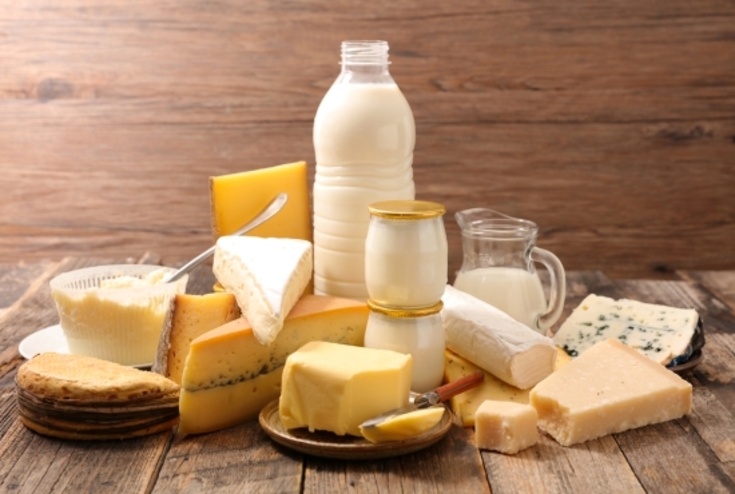
So, much to everybody’s delight, you don’t need to say goodbye to dairy products if you have high cholesterol. It’s simply a question of choosing wisely. In general, just make sure you have a healthy, varied, and balanced diet. Your heart will thank you!
1. Fédération française de cardiologie, Réduire le risque cardio-vasculaire – Le cholestérol, 2020
2. ANSES, Les lipides, 2019
3. Fédération française de cardiologie, Cholestérol : agir contre le cholestérol pour réduire les risques cardio-vasculaires, 2020
4. Association ANHET, Hypercholestérolémie familiale, 2020
5. Inserm, Communiqué de presse : Des lipides laitiers pourraient contribuer à diminuer le risque cardiovasculaire chez des populations à risque, 2019