Popular belief No. 1: goat cheese is full of fat
FALSE.
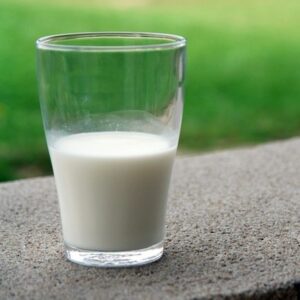
Skim goat milk has a low fat content, just like cow milk.
For example: A 150 ml glass of skim goat milk contains approximately 2.5 g of fat. This equates to a relatively small amount of your daily allowance, which is 70 g per day [1] for a healthy adult.
Popular belief No. 2: goat cheese is full of fat
TRUE
Goat cheese, whether full fat or half fat, skim contains lots of high-quality proteins.
Beyond the quantitative aspect, goat milk contains proteins that are able to provide all of the essential amino acids. These are the building blocks of proteins that cannot be synthesized by the body, and which must therefore be obtained through diet. The amino acids provided through diet are used to renew the proteins in our body which make up our muscles, bones, and organs.
In addition, milk proteins are generally very digestible. Our body is able to use almost all of them. In fact, we digest and absorb 95% of the milk proteins that we consume.
Popular belief No. 3: goat cheese is rich in vitamins and minerals
TRUE and FALSE
It all depends on the type of dairy product and the nutrient in question.
On the whole, goat milk, whether full fat or half fat, contains high levels of magnesium, potassium, sodium, and vitamin B3 in comparison to cow milk.
In addition, goat milk is a “source of calcium and phosphorous”, and therefore helps to maintain a normal bone structure. A 150 ml glass of goat milk therefore provides 20% of the Reference Daily Intake of calcium and almost 25% of phosphorus requirements.
During the cheese-making process, the maturing stage in particular allows other vitamins to develop. The goat cheese log is therefore “rich in vitamins B2 and B9”.
Good to know
The adult human body contains around 1.2-1.4 kg of calcium, 99% of which is found in the bones and the teeth. Milk and dairy products are an ideal source of calcium in terms of both the amount of calcium they provide and its availability to the body.
Milk also contains phosphorus which, along with calcium and magnesium, makes up the mineral mass of the bones in the skeleton.
The calcium and phosphorus provided by milk and dairy products complements bone health and helps to effectively maintain it.
B vitamins, such as vitamins B2, B3, and B9 in particular, help to reduce fatigue.
Popular belief No. 4: goat milk contains very little lactose
TRUE
Goat milk, whether full fat or skim, contains an average of 4.2 g2 of lactose per 100 ml This is slightly less than cow milk which has 4.7 g2 of lactose per 100 ml.
With this lactose content, drinking a 150 ml glass of goat milk3 (providing 6 g of lactose) can easily be tolerated by people who are diagnosed as being lactose intolerant. In fact, a study conducted on subjects with a lactase deficiency (the enzyme which breaks down lactose) demonstrated that consuming up to 7 g of lactose in one sitting could be tolerated without experiencing any additional digestive symptoms, in comparison to consuming “lactose-free” milk4.
For more information, take a look at our article about lactose intolerance here.
Popular belief No. 5: goat milk is less allergenic than cow milk
TRUE and FALSE
- On the one hand, goat milk contains proteins which could cause allergies, just like cow milk. Incidentally, the main proteins responsible for a Cow Milk Protein Allergy (CMPA) are very similar to those present in goat milk. As a result, over 90% of children with CMPA are also allergic to the proteins in goat milk5. This is known as cross-reactivity.
- On the other hand, however, allergies to goat milk proteins affect fewer people than CMPA. This is because proportions of some of the main proteins responsible for the allergic reaction differ between cow milk and goat milk. A scientific study has therefore demonstrated that more goat milk is needed to trigger a reaction in patients with a cow milk allergy5.
Note: CMPA is the most frequent cause of food allergies in babies, although it only affects 2 to 3% of young children aged 3 and under 6.
In conclusion, the proteins in goat milk can trigger allergies, but with a much lower frequency than CMPA.
In all cases, people who are allergic to cow’s milk proteins must not replace cow milk with goat milk without medical advice.
Popular belief No. 6: goat milk is easier to digest than cow milk
TRUE and FALSE
Many consumers, but also many health professionals, present goat milk as being easier to digest and this idea is supported by several scientific explanations. Several scientific explanations support the idea that goat milk is easier to digest than cow milk:
- Less lactose
- The proportion of the common proteins in milk differ between cow milk and goat milk
- Milk fat globules in goat milk are smaller than in cow milk and are made up of short- and medium-chain fatty acids, while cow milk is made up of long-chain fatty acids.
When it comes to goat milk, there are still secrets and potential benefits waiting to be discovered.
[1] Apports de Référence en matières grasses au sens du Règlement UE n°1169/2011 – INCO.
[2] Table CIQUAL, 2017.
[3] Portion recommandée dans le cadre du Programme National Nutrition Santé (PNNS). Lancé en France en 2001, le PNNS est un plan de Santé Publique visant à améliorer l’état de santé de la population en agissant sur l’un de ses déterminants majeurs, la nutrition : http://www.mangerbouger.fr/Les-recommandations/Aller-vers/Les-produits-laitiers
[4] Vesa TH, Seppo LM, Marteau PR, Sahi T, Korpela R. Role of irritable bowel syndrome in subjective lactose intolerance. Am J Clin Nutr 1998;67:710-5.
[5] Bellioni-Businco B., Paganelli R., Lucenti P., Giampietro P.G., Perborn H., Businco L., 1999. Allergenicity of goat’s milk in children with cow’s milk allergy. J Allergy Clin Immunol., 103(6):1191-1194.
[6] Osborne N.J., Koplin J.J., Martin P.E., Gurrin L.C., Lowe A.J., Matheson M.C., Ponsonby A.L., Wake M., Tang M.L., Dharmage S.C., Allen K.J., 2011. Prevalence of challenge-proven IgE-mediated food allergy using population-based sampling and predetermined challenge criteria in infants. J.Allergy Clin.Immunol., 127(3):668-676. Schoemaker A.A., Sprikkelman A.B., Grimshaw K.E., Roberts G., Grabenhenrich L., Rosenfeld L., Siegert S., Dubakiene R., Rudzeviciene O., Reche M., Fiandor A., Papadopoulos N.G., Malamitsi-Puchner A., Fiocchi A., Dahdah L., Sigurdardottir S.T., Clausen M., Stanczyk-Przyluska A., Zeman K., Mills E.N., McBride D., Keil T., Beyer K., 2015. Incidence and natural history of challenge-proven cow’s milk allergy in European children–EuroPrevall birth cohort. Allergy, 70(8):963-972.